Menu
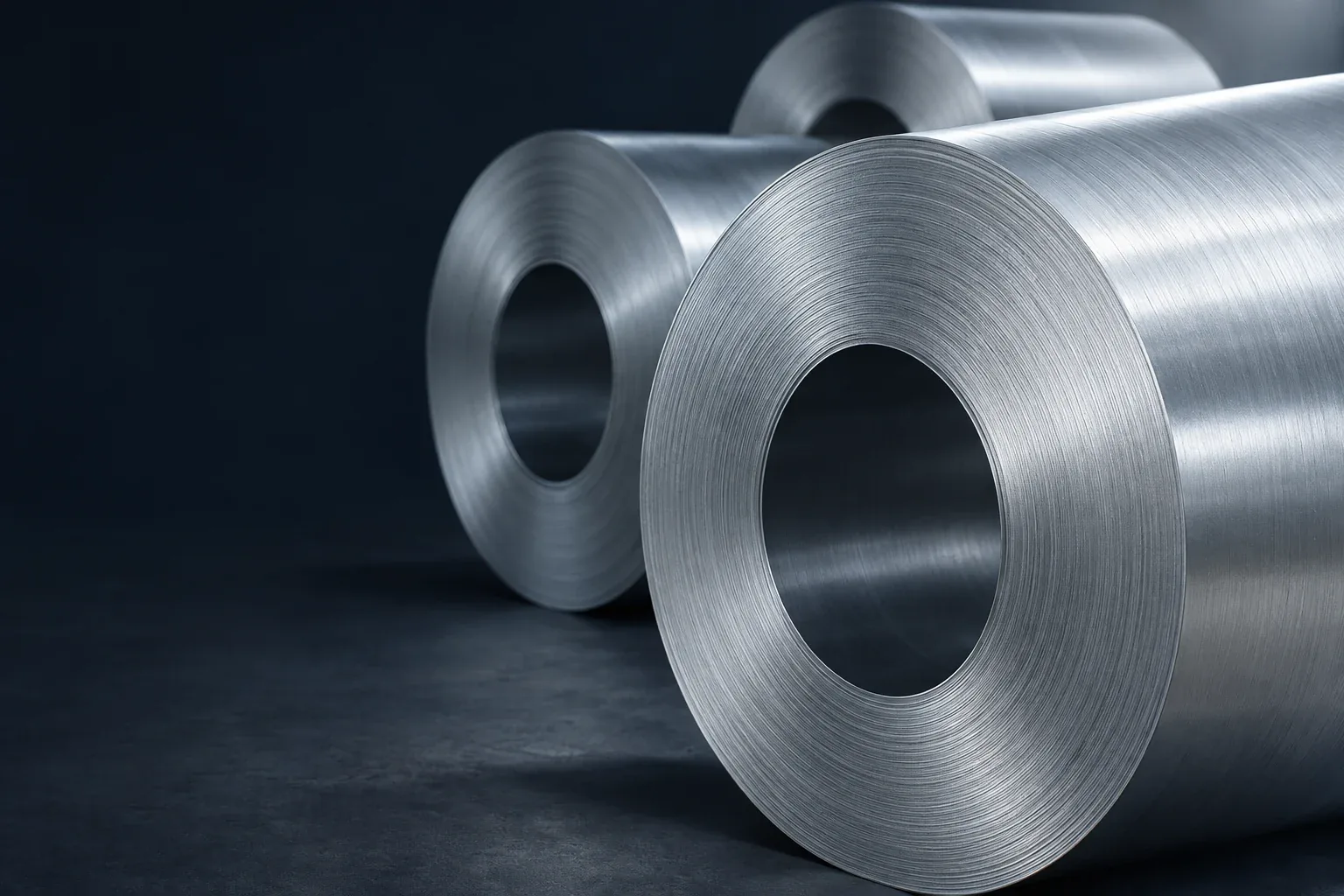
Aluminum coils stored in a rolling mill yard
ALUMINUM SUPPLY & SOURCING

Aluminum supply
into and out
of Korea.

Primary metal, alloys and scrap for Korean industry.
Korean rolled products for international buyers.
One point of coordination, from specification to shipment.

BASED IN INCHEON, KOREA
01 / SUPPLY DIRECTIONS

Aluminum supply, in both directions

Inquivix Technologies supplies aluminum in two directions. Into Korea, we supply primary aluminum ingot, extrusion billet, rolling slab, master alloys and sorted scrap to rolling mills, extruders, foundries and foil producers. Out of Korea, we source Korean aluminum coil, sheet, plate and foil from qualified mills for international buyers. One company handles the specification, the source, the documents and the shipment on both routes.

We are a supplier and sourcing partner based in Incheon. We do not operate a smelter or a rolling mill, and we do not hold stock. Every order is sourced to the buyer's specification.

02 / IN THIS SECTION

Aluminum pages on this site

Each page below goes deeper on one part of the aluminum business.

  • Primary metal, alloys and scrap

    Ingot (P1020, A7), billet, slab, master alloys and sorted scrap for Korean mills, extruders and foundries. Covers how a Korean mill qualifies a new overseas source, the documents per shipment, and how metal and scrap are priced.

    Primary metal and scrap into Korea
  • Korean rolled products

    Coil, sheet, plate and foil from Korean mills. Covers forms and thickness ranges, the 1xxx to 8xxx alloy families, tempers, the standards Korean mills certify to, and how to write a specification a mill can quote.

    Korean aluminum coil, sheet, plate and foil
  • Alloy reference

    Composition limits, usual tempers, forms and standards for each alloy we work with, from P1020 ingot to 8079 foil, plus scrap grades and a temper code table. Use it when writing a specification.

    Aluminum alloy reference
  • Section 232 and CBAM

    What the US Section 232 tariff and the EU Carbon Border Adjustment Mechanism mean for Korean aluminum in 2026, and the documents a US-bound or EU-bound shipment needs.

    Section 232 and CBAM for Korean aluminum
03 / INTO KOREA

Primary aluminum, alloys and scrap into Korea

Korea does not smelt primary aluminum. Every tonne of primary metal that Korean rolling mills, extruders, foundries and foil producers melt is imported, along with most of the alloying material and a large share of the scrap. That makes Korea a steady buyer of overseas metal, and it buys to specification.

We supply the inputs those plants buy:

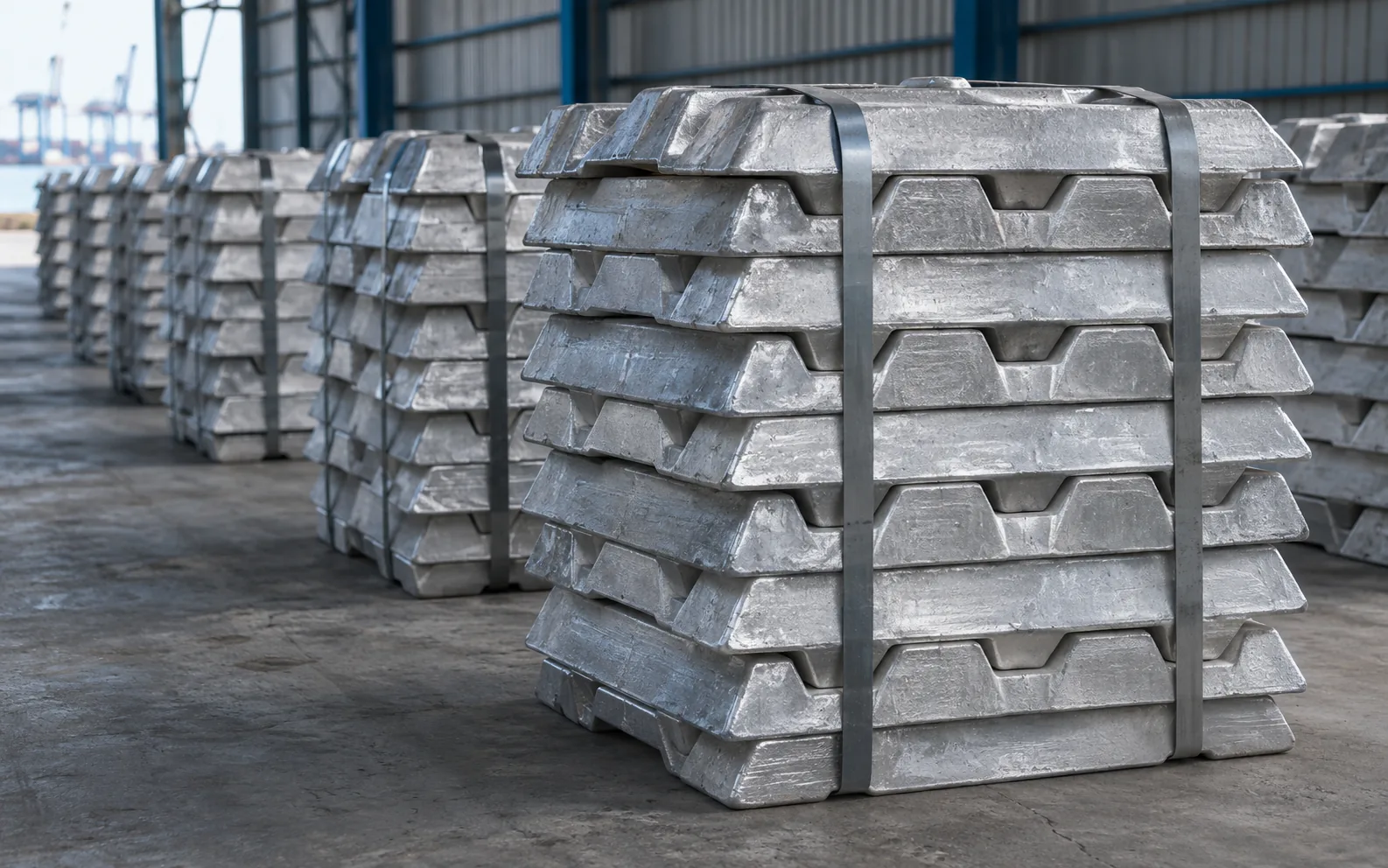
  • Primary aluminum ingot. P1020 and A7, both 99.70 percent minimum purity, supplied in bundled stacks.
  • Extrusion billet and rolling slab. Billet in 6063, 6061 and other 6xxx alloys, and slab to the mill's dimensions.
  • Master alloys and alloying elements. Grain refiners, hardeners and pure additions for chemistry adjustment in the furnace.
  • Sorted aluminum scrap. By alloy and grade. Used beverage can (UBC) scrap is sourced on request, subject to availability.

A Korean mill does not change metal sources on price alone. It reviews the specification and the certificates, tests a sample, runs a trial lot, and only then approves regular supply. We run that sequence on the supplier's side, in Korean. See how Korean import prices are built from LME and premiums.

Bundles of primary aluminum ingots stacked in a warehouse
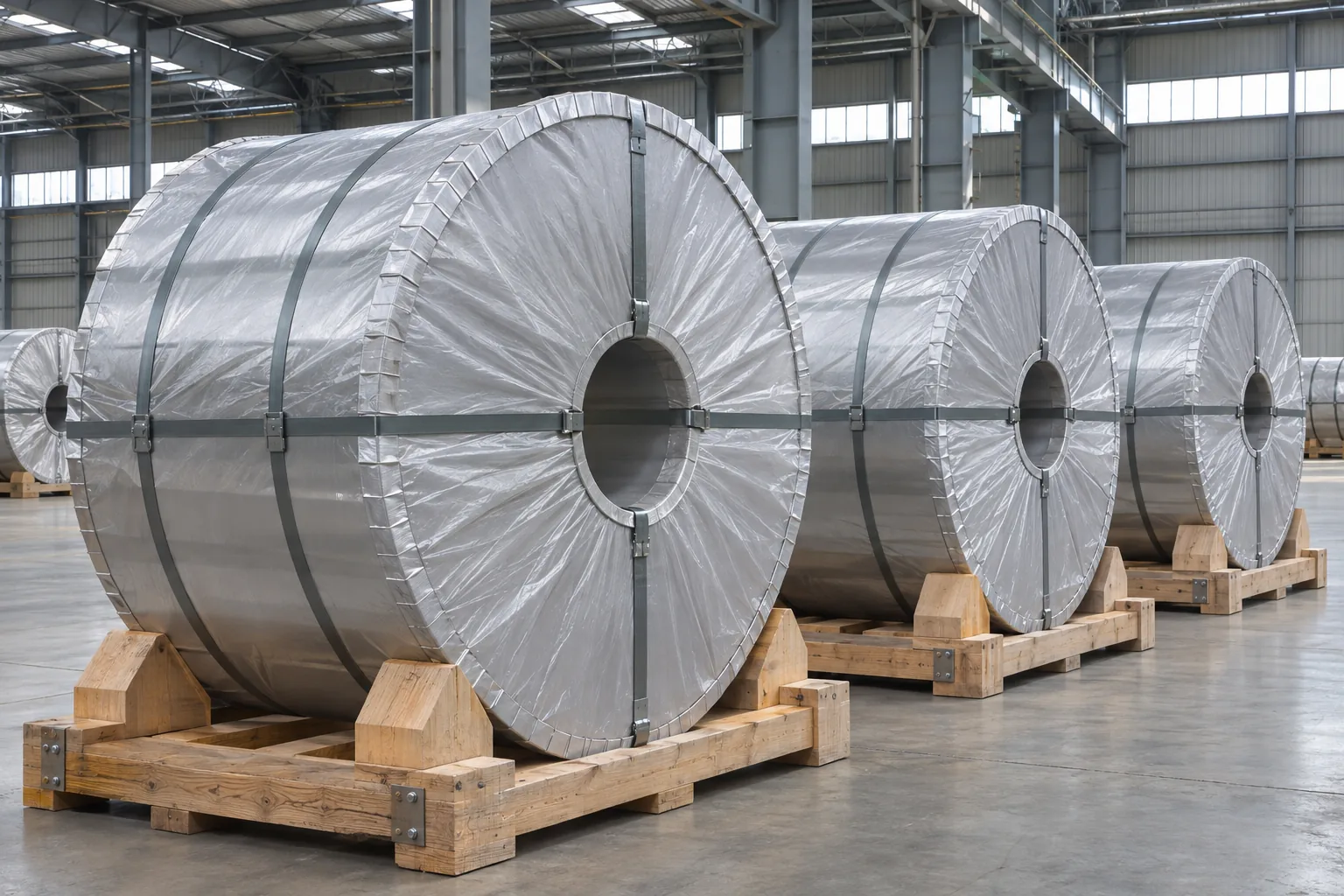
Aluminum coils wrapped and strapped on pallets for export
04 / FROM KOREA

Korean aluminum coil, sheet, plate and foil for international buyers

Korea has a compact flat-rolled aluminum industry: a small number of integrated mills that cast, hot roll, cold roll and finish, plus re-rollers and foil mills. They roll the common wrought alloy families from 1xxx to 8xxx to KS standards, and certify to ASTM, EN or JIS on request.

We source Korean rolled aluminum for buyers who have a defined specification and want one counterparty managing the mill, the qualification, the documents and the shipment:

  • Coil and sheet. 1xxx, 3xxx and 5xxx alloys for packaging, heat exchangers, transport and general fabrication.
  • Plate. 5083, 6061 and other 5xxx and 6xxx alloys for marine, structural and tooling use.
  • Foil and foil stock. 1xxx and 8xxx alloys for packaging, pharmaceutical blister and battery applications.

Thickness and width capability differs by mill and product line, so we confirm the range for each inquiry and do not publish a generic table. Since the 2025 and 2026 changes to US tariffs, more Korean output is available to buyers outside the United States. See which Korean mills roll which products.

Share your specification, quantity and destination.

Send an aluminum inquiry
05 / PRODUCTS & ALLOYS

Products and alloy families

Alloy, temper, dimensions, surface finish and the applicable standard guide each inquiry. Availability and certification are reviewed for the specific product.

Aluminum product and alloy inquiry reference
Family Grades / alloys Forms for inquiry Supply direction
Primary metal P1020 · A7 Ingot, billet, slab Into Korea
1xxx 1050 · 1070 · 1100 Coil, sheet, foil From Korea
3xxx 3003 · 3004 · 3104 · 3105 Coil, sheet From Korea
5xxx 5052 · 5083 · 5182 Sheet, plate From Korea
6xxx 6061 · 6063 Plate, extrusion billet Both directions
8xxx 8011 · 8021 · 8079 Foil stock From Korea
Sorted scrap By alloy and grade Clean process and segregated alloy scrap Into Korea

Composition limits, tempers and standards for every alloy are on the aluminum alloy reference.

Forms listed apply at family level. Individual alloy, form and temper combinations require confirmation.

Have a specification ready?
APPLICATION REQUIREMENTS
  • Packaging

    Can body stock in 3004 and 3104, can end stock in 5182, and packaging foil in 8011, 8021 and 8079.

  • Battery materials

    Cathode current collector foil in 1xxx alloys, and 3xxx sheet for battery cans and modules.

  • Automotive

    5xxx body and structural sheet, and 3xxx heat exchanger stock.

  • General engineering

    1xxx, 3xxx and 5xxx sheet and plate for fabrication, enclosures, transport and construction.

06 / QUALIFICATION

Source qualification and material testing

Inquivix Technologies coordinates the commercial and technical communication between the buyer and the source. Qualification requirements are agreed before an order progresses.

Qualification depends on the direction. For metal going into Korea, the mill's sequence of specification review, certificate review, sample and trial lot typically takes one to three months, and the shipping time of the trial lot is the largest part of it. For Korean rolled products, a first order usually starts with a sample review and, for demanding applications such as can stock, battery foil or automotive sheet, a trial lot. Chemistry, mechanical properties and dimensions can be checked by an accredited third-party laboratory before shipment.

Discuss your qualification requirements
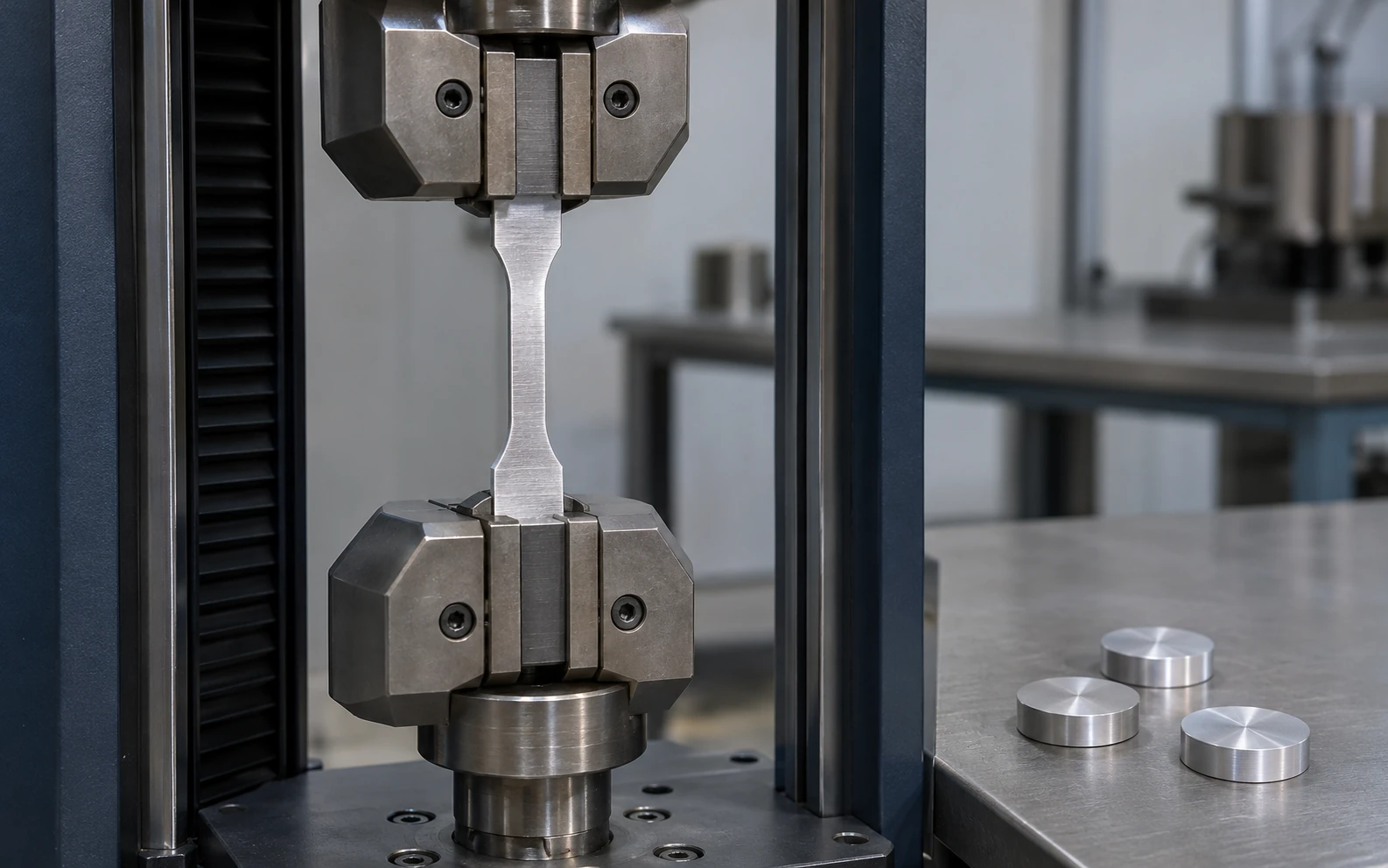
Aluminum tensile test specimen in a testing machine

Independent testing

Testing can be arranged through KTR (Korea Testing and Research Institute) or a buyer-specified accredited laboratory, with scope agreed per inquiry.

  1. 01

    Define the specification

    Product, alloy or grade, temper, dimensions, standard, quantity and destination.

  2. 02

    Review the source

    Match production capability and quality documentation to the buyer's requirements.

  3. 03

    Agree qualification & testing

    Coordinate chemistry review, samples or trial lots where required by the buyer.

  4. 04

    Confirm terms & shipment documents

    Agree delivery and payment terms, then check the required documentation before shipment.

07 / POLICY AND COMPLIANCE

Policy and compliance context

Two policy changes shape how Korean aluminum moves today.

United States: Section 232 at 50 percent

On June 3, 2025, a presidential proclamation raised the Section 232 tariff on steel and aluminum imports from 25 percent to 50 percent, effective June 4, 2025. Proclamation 11021 of April 2, 2026 then restructured the regime: since April 6, 2026 the duty applies to the full customs value of the article, with aluminum sheet and coil in the 50 percent tier, derivative articles substantially made of metal at 25 percent, and articles with 15 percent or less metal content by weight excluded. For Korean exporters of rolled aluminum this sets the economics of every US-bound shipment, and it has pushed US buyers to compare total landed cost across origins more carefully than before. Buyers in third countries have, in turn, gained access to Korean supply that would previously have gone to the US. We help buyers model the landed cost for their specific product and route.

Source: White House proclamation, June 3, 2025 Source: Proclamation 11021, April 2, 2026

European Union: CBAM definitive period

The EU's Carbon Border Adjustment Mechanism moved from a reporting-only transitional phase to its definitive regime on January 1, 2026. EU importers of aluminum above a 50-tonne annual threshold must now be authorised CBAM declarants, declare the embedded emissions in what they import, and surrender certificates against those emissions. In practice this means EU buyers now ask their Korean suppliers for verified emissions data at the product level, and a mill that can provide it has an advantage. We coordinate that data request between the buyer and the mill.

Source: European Commission, Carbon Border Adjustment Mechanism

Dates, rates and the document list for each destination are on the Section 232 and CBAM page.

08 / TRADE DOCUMENTATION

Trade documentation and delivery requirements

Specify the destination and intended use early so the required certificates, inspection scope and trade documents can be reviewed with the source.

01

Material & quality

Mill test certificates, chemistry, mechanical properties and dimensional inspection, as required by the agreed specification.

02

Origin & shipment

Certificates of origin, packing lists and inspection reports checked for consistency with the order.

03

Destination requirements

Buyer-specific documentation and supplier data requests reviewed for the intended market before commercial terms are finalised.

04

Delivery terms, lead time and payment

We quote on FOB, CFR, CIF or DAP terms, depending on the buyer's preference and destination. Lead time runs from the mill's rolling schedule, not from stock. For standard flat-rolled items, expect six to twelve weeks from confirmed order to shipment, and longer for non-standard alloys or tempers. Every quotation states the lead time as a range. Payment for international metal trade is by letter of credit at sight or confirmed telegraphic transfer. We do not ask for advance payment against unverified supply, and we advise buyers not to pay it to anyone else.

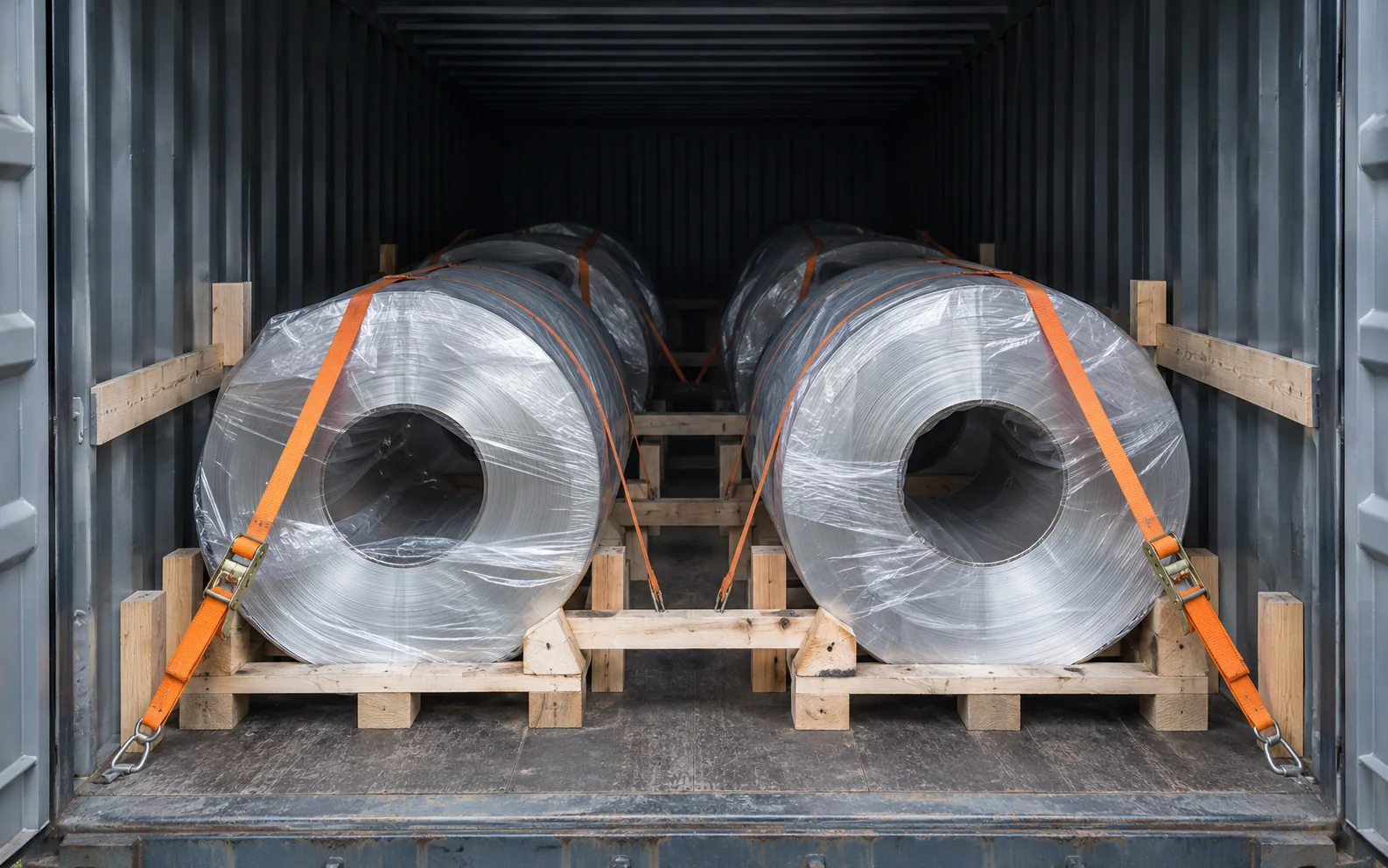
Aluminum coils secured inside a shipping container

Commercial terms Delivery terms, payment structure and lead time are confirmed for each quotation.

Discuss your destination
09 / FAQ

Frequently asked questions

What aluminum products does Inquivix Technologies supply?

Into Korea: primary aluminum ingot (P1020, A7), extrusion billet, rolling slab, master alloys and sorted scrap. From Korea: coil, sheet, plate, foil and foil stock in the 1xxx, 3xxx, 5xxx, 6xxx and 8xxx alloy families.

Does Inquivix Technologies produce aluminum?

No. We do not operate a smelter or a rolling mill, and we do not hold stock. We source from qualified producers and Korean mills to the buyer's specification, and we manage qualification, documents and shipment.

What do you need from me to quote?

The product form, the alloy and temper (or the grade for primary metal and scrap), the standard, the dimensions, the quantity, the destination and the required delivery date. The full list is in how to specify an order.

How long does a first order take?

For standard Korean flat-rolled products, six to twelve weeks from confirmed order to shipment. Qualifying a new metal source with a Korean mill typically takes one to three months before regular supply starts.

Can Korean aluminum be shipped to the United States or the European Union?

Yes. In the United States, Korean coil, sheet, plate and foil pay the 50 percent Section 232 tariff on full customs value. In the European Union, importers above 50 tonnes a year of CBAM goods must declare the embedded emissions of what they import, which needs data from the mill. Both are explained on the Section 232 and CBAM page.

Do you supply aluminum scrap, including UBC?

We supply sorted scrap by alloy and grade, described by the ISRI (ReMA) specification the trade uses. Used beverage can (UBC) scrap is sourced on request, subject to availability. See sorted aluminum scrap.

10 / ALUMINUM INQUIRY

Discuss your aluminum requirement

Start with the product, alloy, quantity and direction. A complete specification helps us assess the sourcing or supply requirement.

YOUR POINT OF CONTACT

Inquivix Technologies

Incheon, Republic of Korea

Visit our contact page
I am interested in

We respond within 2 business days.