Skip to content
Menu
Contact Sales
Incheon, Korea · Established 2022

Semiconductor process systems and aluminum supply,
into and out of Korea

Our work is distribution and trade across Korea's border, in both directions. On each order we are the single counterparty for the specification, the source, the documents and the delivery, in English and Korean.

Inquivix Technologies is an Incheon-based company serving Korea's semiconductor and aluminum industries. It supplies hydrogen, ozone, and ultrapure water systems to semiconductor fabs and represents foreign equipment suppliers in Korea. In aluminum, it supplies primary metal, alloys, and scrap to Korean rolling mills, extruders, and foil producers, and sources rolled coil, sheet, and foil from qualified Korean mills for international buyers.

Established
2022
Head office
Songdo, Incheon, Korea
Business lines
Semiconductor process systems · Aluminum supply and sourcing
Working languages
English and Korean
01 / What we do

Two business lines, each working in both directions

Korea makes a large share of the world's memory chips, and it rolls aluminum for packaging, battery, automotive and engineering customers. Both industries depend on trade across the border. Korean fabs buy process equipment and materials from overseas suppliers, and Korean-made equipment goes to fabs abroad. Korean mills import all of their primary aluminum and export coil, sheet, plate and foil. Inquivix Technologies works on all four of those flows.

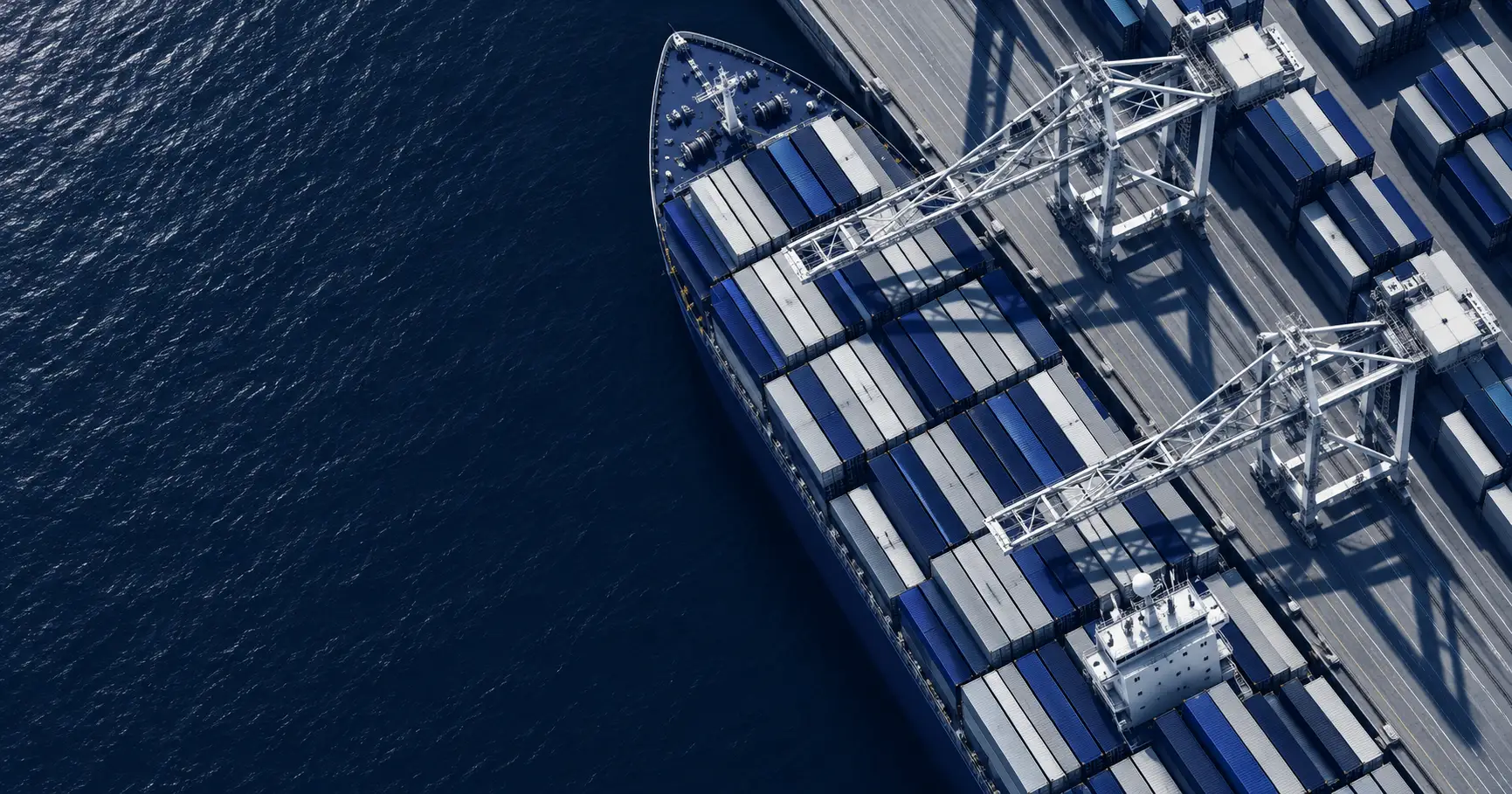
Container ship at a port terminal

The method is the same in all four. A specification is agreed in writing before a price is quoted. The source is qualified before the first order. The documents are checked against the contract before a shipment moves. One company stays responsible from inquiry to delivery, and the buyer and the producer each deal with one counterparty in their own language.

Semiconductor is our established line. Aluminum is our second line, run with the same discipline.

02 / Semiconductor process systems

Hydrogen and ozone systems for semiconductor wet processing

We supply four system types for wafer cleaning, oxidation and process gas applications on 200 mm and 300 mm lines. Each system is built to order and configured to the customer's process specification.

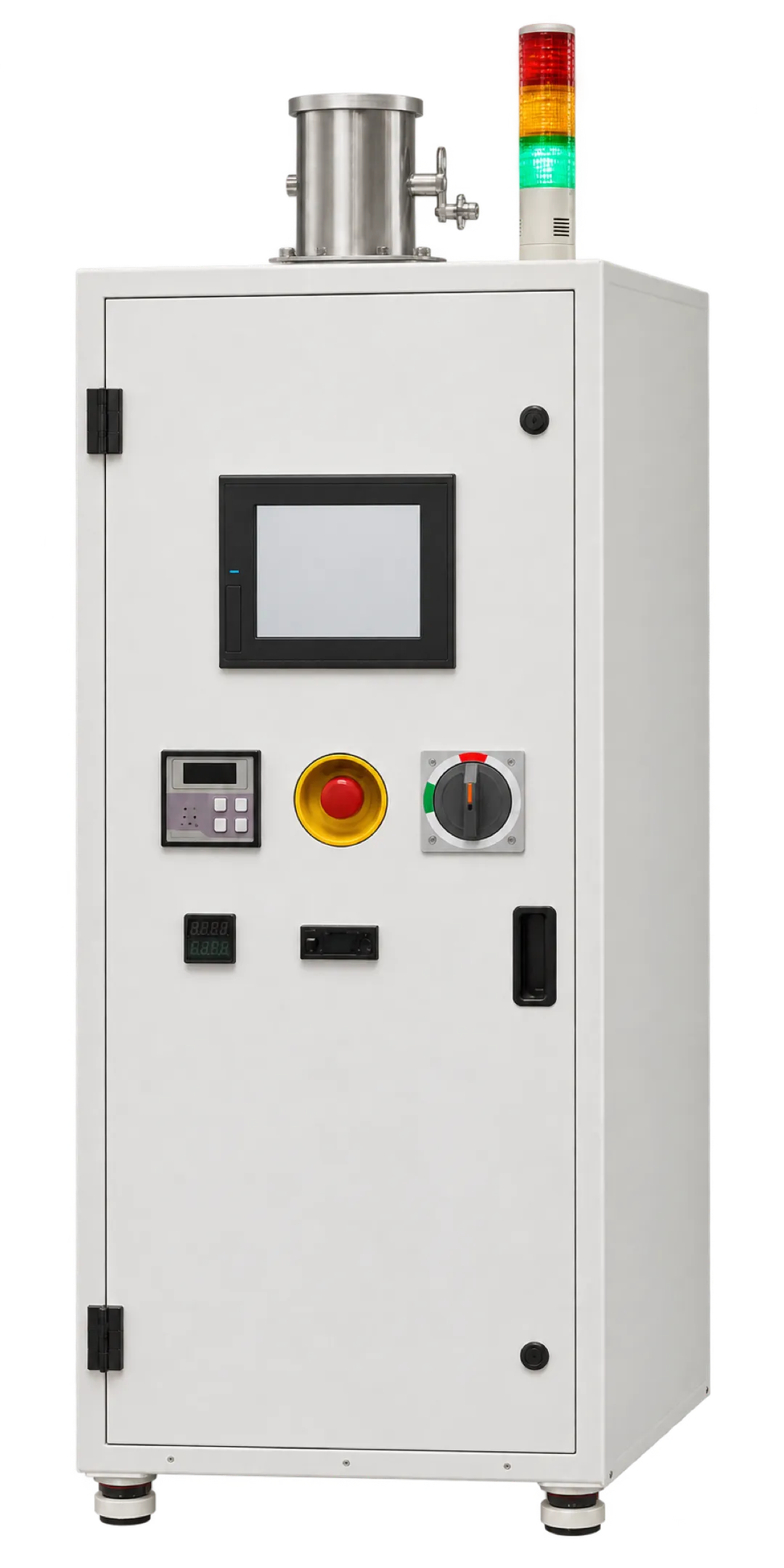
Dissolved hydrogen water generator

Contamination control in wet processing protects wafer yield, and functional water and process gas are part of it. Dissolved hydrogen water improves particle removal in cleaning and rinse steps. Ozone water oxidises organic residue and replaces sulfuric peroxide mixtures in applicable cleaning steps, which lowers chemical consumption and the waste that follows it. Hydrogen gas generated on site replaces compressed cylinder supply for the processes it serves, and ozone gas at high concentration supports oxidation and surface treatment.
The four systems

The four systems
System What it does in the fab Output specification Details
Dissolved hydrogen water generator Dissolves hydrogen into ultrapure water at a controlled concentration for cleaning and rinsing up to 2.0 ppm dissolved hydrogen · up to 100 LPM ultrapure water flow Hydrogen water systems
Hydrogen gas generator Produces high-purity hydrogen gas on site 99.999% (5N) purity · 1 to 4 NL/min Hydrogen gas generators
Ozone water system Dissolves ozone into ultrapure water for oxidative cleaning 10 to 100 ppm ozone in deionised water Ozone water systems
Ozone gas generator Produces high-concentration ozone gas Up to 300 g/Nm³ Ozone gas generators

Where the systems are used

Where the systems are used
Application System
Wafer cleaning and rinsing: particle removal and post-clean rinse Dissolved hydrogen water generator
Surface passivation after cleaning Dissolved hydrogen water generator
Photoresist stripping and organic removal Ozone water system
Controlled surface oxidation Ozone water system, ozone gas generator
Reducing atmospheres, annealing and carrier gas Hydrogen gas generator
Cleaning steps in advanced packaging, display and photovoltaic manufacturing Dissolved hydrogen water generator, ozone water system

Standards and interfaces

SECS/GEM communication to SEMI E30 and E37, for connection to the fab host. Wetted materials on the water systems are compatible with ultrapure water. Certification requirements for the installation country are confirmed for each system at proposal stage. The figures in the table are standard output ranges. The configuration for an order is fixed in the proposal.

03 / Korea market entry

Representation in Korea for foreign equipment and materials suppliers

Korea's semiconductor fabs and equipment makers qualify new suppliers carefully, and they work in Korean. We represent selected foreign equipment and materials companies in Korea as their distributor and local counterpart.

The size of the market explains the effort. Samsung Electronics and SK hynix together held about 65 percent of global DRAM revenue in the second quarter of 2026, according to Counterpoint Research. In January 2024 the Korean government set out a plan under which the two companies invest KRW 622 trillion through 2047 in 16 new fabs across southern Gyeonggi Province: 13 for production and three for research. We cite both companies as market context only.

What a Korean customer expects from a new foreign supplier

  • Specifications, technical documents and quotations in Korean.
  • A local company to contract with, import through and call.
  • Evidence that the product meets the customer's specification, and support while the customer evaluates it.
  • A named contact after delivery for parts, service and questions.

How representation works

  1. Fit assessment. We test whether the technology has a real application and a commercial path in Korea before either side commits.
  2. Qualification support. Korean-language documentation, specification alignment and support through the customer's qualification process.
  3. First order. Quotation, contract, import and delivery handled locally.
  4. Account development. The account work after the first order: follow-up, repeat orders and new applications.

We take on a product when it has a real application in Korea and a workable commercial path. When the fit assessment says otherwise, we say so before either side spends money. Territory, exclusivity and term are set in a written agreement.

The same model applies to metals. Overseas producers of primary aluminum, alloys and scrap use us as their counterpart in Korea, as described under aluminum into Korea below.

04 / Aluminum into Korea

Primary aluminum, alloys and scrap for Korean producers

Korea has no primary aluminum smelter. Its rolling mills, extruders, foundries and foil producers import every tonne of primary metal they melt, most of their alloying material and a large share of their scrap. They buy to specification, and they check the documents before a lot is accepted.

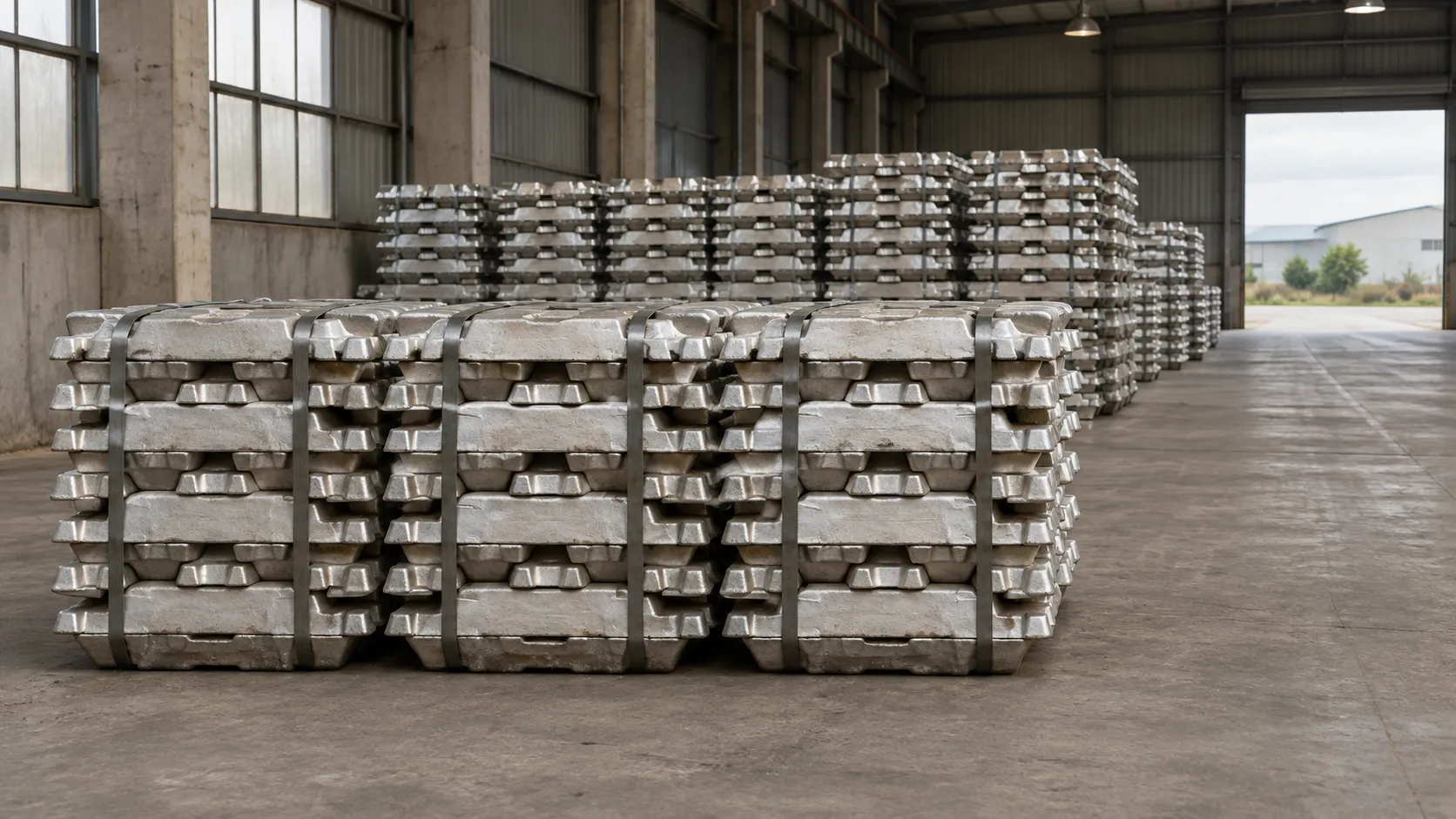
Bundles of primary aluminum ingots

What we supply into Korea

  • Primary aluminum ingot

    P1020 and A7, 99.70 percent minimum purity, in bundled stacks

  • Extrusion billet

    6063, 6061 and other 6xxx alloys

  • Rolling slab

    To the mill's alloy and dimensions

  • Master alloys and alloying elements

    Grain refiners, hardeners and pure additions for chemistry adjustment in the furnace

  • Sorted aluminum scrap

    By alloy and grade, to ISRI (ReMA) specifications. Used beverage can scrap is sourced on request, subject to availability

How a Korean mill approves a new metal source

Price is one of several things a Korean mill checks before it changes a metal source. The sequence is consistent across the industry:

  1. Specification review. The mill issues its purchase specification, often with chemical limits tighter than the trading grade.

  2. Certificate review. The mill's quality department reviews the certificate of analysis and the producer's quality certifications.

  3. Sample. A physical sample goes to the mill for its own analysis.

  4. Trial lot. A production-scale lot, typically one container or one furnace charge, is purchased and run.

  5. Approval and terms. The source joins the approved supplier list and terms for regular supply are set.

From specification review to approval typically takes one to three months, and the shipping time of the trial lot is the largest part of it. We run this sequence on the supplier's side and handle the technical communication with the mill in Korean.

Pricing and payment

Primary metal and alloys are priced on an LME basis plus a premium for grade, form, origin and delivery terms. Payment is by letter of credit at sight or by telegraphic transfer against documents. We do not ask for advance payment against unverified supply, and we advise Korean buyers not to pay it to anyone else.

05 / Aluminum from Korea

Korean coil, sheet, plate and foil for international buyers

Korea's flat-rolled aluminum industry is compact: a small number of integrated mills that cast, hot roll, cold roll and finish, plus re-rollers and foil mills. We source from qualified Korean mills for buyers who have a defined specification and want one counterparty managing the mill, the qualification, the documents and the shipment.

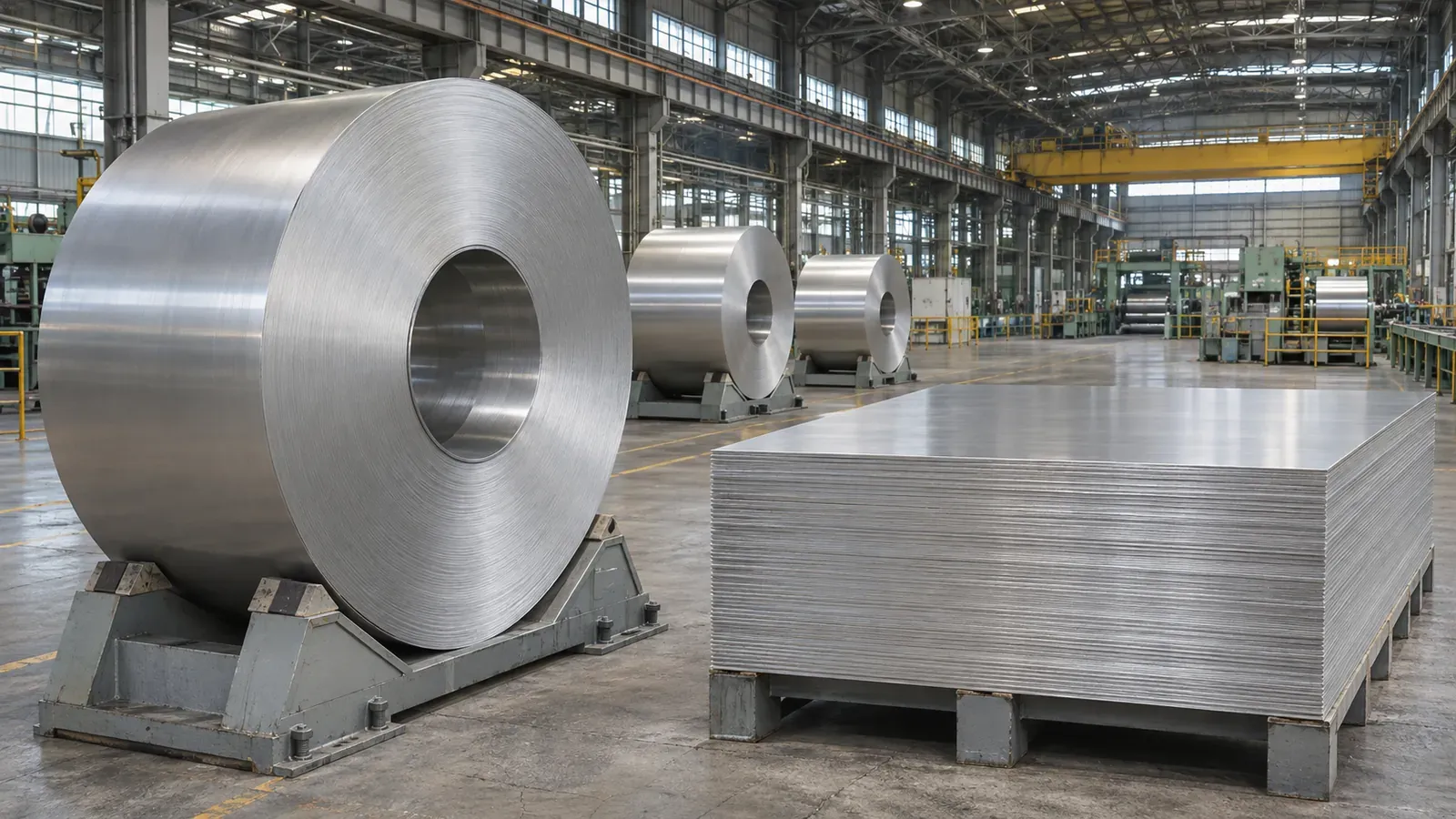
Aluminum coil and sheet

What we source from Korea

  • Coil and sheet

    Alloys
    1xxx, 3xxx and 5xxx
    Typical uses
    Packaging, heat exchangers, transport and general fabrication
  • Plate

    Alloys
    5083, 6061 and other 5xxx and 6xxx alloys
    Typical uses
    Marine, structural and tooling
  • Foil and foil stock

    Alloys
    1xxx and 8xxx, including 8011, 8021 and 8079
    Typical uses
    Packaging, pharmaceutical blister and battery applications

Alloys by application

Alloys by application
Application Typical alloys
Can body and can end stock 3004 and 3104 for the body, 5182 for the end
Packaging foil 8011, 8021 and 8079
Battery materials 1xxx cathode current collector foil, 3xxx sheet for cans and modules
Automotive 5xxx body and structural sheet, 3xxx heat exchanger stock
General engineering 1xxx, 3xxx and 5xxx sheet and plate

Standards

Korean mills produce to Korean Industrial Standards by default, with KS D 6701 covering sheet, plate and strip. On request, and routinely for export, they certify to ASTM B209, EN 485 or JIS H4000. Name the standard at inquiry. A mill test certificate issued to one standard cannot be converted to another after the fact.

Lead time and what a quotation needs

6 to 12 weeks typical, standard flat-rolled items, subject to mill confirmation

We do not roll aluminum and we do not hold stock. Each order is produced to the buyer's specification, so lead time runs from the mill's rolling schedule: typically six to twelve weeks from confirmed order to shipment for standard flat-rolled items, subject to mill confirmation, and longer for non-standard alloys or tempers. Thickness and width capability differs by mill, and we confirm the range for each inquiry.

A quotation needs the form, the alloy and temper, the standard, the dimensions, the quantity, the destination and the required delivery date.

06 / Trade policy

Section 232 and CBAM: what changed for Korean aluminum in 2026

Two policy regimes set the landed cost and the paperwork for Korean flat-rolled aluminum going to the United States and the European Union. Both changed in 2026.

United States: Section 232

Korean coil, sheet, plate and foil pay a 50 percent tariff. Since 6 April 2026 the duty applies to the full customs value of the article, so the applicable tariff classification and customs value must be confirmed for each shipment. There is no Korea-specific exemption or quota.

European Union: CBAM

The definitive period of the Carbon Border Adjustment Mechanism began on 1 January 2026. Importers above 50 tonnes a year of CBAM goods must be authorised declarants. The first declaration, covering 2026 imports, is due by 30 September 2027, and declaring actual emissions needs verified data from the mill.

For buyers outside the United States, more Korean output is available than before the tariff changes. For each destination we check that the right documents exist and agree with each other before a shipment moves. We do not provide customs or legal advice.

07 / How we work

What we handle on every order

The stages are the same for a dissolved hydrogen water generator and for a container of ingot. What changes is the content of each stage.

  1. Specification

    Semiconductor system

    Process requirement, site conditions and installation responsibilities confirmed

    Aluminum

    Form, alloy or grade, temper, standard, dimensions, quantity and destination confirmed

  2. Source

    Semiconductor system

    System configured to the specification, with a written proposal and quotation

    Aluminum

    Producer or mill qualified: specification review, certificate review and production capability

  3. Verification

    Semiconductor system

    Installation support, start-up and handover on site

    Aluminum

    Samples tested by an accredited third-party institution in Korea, such as KTR (Korea Testing and Research Institute), for chemistry, mechanical properties and dimensions

  4. Documents

    Semiconductor system

    Export documents and import handling to the installation site

    Aluminum

    Commercial invoice, packing list, mill test certificate, certificate of origin and bill of lading, plus the destination documents for Section 232 or CBAM

  5. Delivery

    Semiconductor system

    Shipping to the installation site

    Aluminum

    Booking, export clearance and delivery on FOB, CFR, CIF or DAP terms

  6. After delivery

    Semiconductor system

    Spare parts, maintenance coordination and ongoing technical support

    Aluminum

    The document set for each shipment is kept on file, so a later audit can be answered from it

Where a producer permits it, we carry out an audit of the mill or plant before the first order. Testing is done by accredited third-party institutions, so the result is independent of both the seller and the buyer.

08 / Who we work with

Who we work with

Semiconductor

  • Semiconductor fabs and research facilities
  • Wet process equipment OEMs and process integrators
  • Foreign semiconductor equipment and materials suppliers entering Korea

Aluminum

  • Korean rolling mills, extruders, foundries and foil producers
  • Overseas metal producers and traders supplying Korea
  • International buyers of Korean aluminum products

Inquivix Technologies has one office, in Songdo, Incheon. It operates no smelter and no rolling mill, and it holds no aluminum stock. Every system is built to order and every aluminum lot is sourced to order.

09 / FAQ

Frequently asked questions

What does Inquivix Technologies do?

Inquivix Technologies is based in Incheon, Korea, with two business lines. In semiconductors, it supplies hydrogen and ozone systems for wet processing and represents foreign equipment and materials suppliers in Korea. In aluminum, it supplies primary metal, alloys and scrap to Korean producers and sources Korean rolled products for international buyers.

Where is Inquivix Technologies based?

The head office is in Songdo, Incheon, Korea. The company was established in 2022 and works in English and Korean.

Which semiconductor systems does Inquivix Technologies supply?

Four: dissolved hydrogen water generators (up to 2.0 ppm as standard, up to 100 LPM by configuration), hydrogen gas generators (99.999% purity, 1 to 4 NL/min), ozone water systems (10 to 100 ppm) and ozone gas generators (up to 300 g/Nm³). Each is configured to the customer's process specification.

What do you need to prepare a system proposal?

The application, the dissolved concentration or gas purity required, the flow range, the wafer size, the tool or facility interface, the installation country with its certification requirements, the installation responsibilities and the schedule. We prepare a configured proposal with a written quotation once those points are confirmed.

Do you install and commission the systems?

Installation and commissioning support can be included. We confirm site responsibilities, start-up, handover and after-sales scope in the proposal.

How does representation in Korea start?

With a fit assessment. We test whether the product has a real application and a commercial path in Korea before either side commits. If it does, the work moves to Korean-language documentation and qualification support, then the first order, then account development.

What aluminum products does Inquivix Technologies supply?

Into Korea: primary aluminum ingot (P1020 and A7), extrusion billet, rolling slab, master alloys and sorted scrap. From Korea: coil, sheet, plate, foil and foil stock in the 1xxx, 3xxx, 5xxx, 6xxx and 8xxx alloy families.

Does Inquivix Technologies produce aluminum or hold stock?

No. The company does not operate a smelter or a rolling mill and does not hold stock. It sources from qualified producers and Korean mills to the buyer's specification, and it manages qualification, documents and shipment.

How long does a first aluminum order take?

For standard Korean flat-rolled products, typically six to twelve weeks from confirmed order to shipment, subject to mill confirmation. Qualifying a new metal source with a Korean mill typically takes one to three months before regular supply starts.

Can Korean aluminum be shipped to the United States or the European Union?

Yes. In the United States, Korean coil, sheet, plate and foil pay the 50 percent Section 232 tariff on full customs value. In the European Union, importers above 50 tonnes a year of CBAM goods must account for embedded emissions. Reporting actual emissions requires verified mill data. The compliance page sets out both.

How do I send an inquiry?

Semiconductor system and representation inquiries go through the contact page. Aluminum inquiries go through the aluminum form, which asks for the direction, product, alloy, quantity and destination.

10 / Inquiry

Start an inquiry

Choose the route that matches the requirement. Each form asks for the details that line needs.

Semiconductor systems and representation

For a system, include the application, the concentration or purity required, the flow, the wafer size, the installation country and the schedule. For representation, include the product, where it is in use outside Korea, and the Korean customers you want to reach.

Contact us

Aluminum

Include the direction (into Korea or from Korea), the product form, the alloy and temper or the grade, the standard, the dimensions, the quantity, the destination and the required delivery date.

Send an aluminum inquiry